The UK online beauty and personal care market was projected to reach $17.87 billion in revenue in 2026, with the market expected to continue growing over the coming years.
For beauty retailers, that makes the online customer experience increasingly important. Shoppers need to be able to discover the right products, understand what they are buying and feel confident enough to complete the purchase, often without being able to see, touch or try the product first.
That puts particular pressure on the ecommerce experience. A beauty store might have hundreds or thousands of products, with shoppers making decisions based on ingredients, skin or hair type, colour, brand, product format, price and personal preferences.
The challenge is not simply making a beauty website look good. It is making the catalogue easy to explore while giving shoppers the information and functionality they need to make a decision.
Make large beauty catalogues easier to navigate
Beauty shoppers rarely want to browse every product a retailer sells. They usually have something specific in mind, whether that is a moisturiser for dry skin, a foundation in a particular shade or a shampoo without certain ingredients.
Search, filtering and product categorisation therefore have an important role to play.
Baymard’s 2025 research found that 58% of desktop ecommerce sites and 78% of mobile sites have poor or mediocre product-list UX. Its research highlights the importance of allowing shoppers to narrow large product catalogues using relevant attributes such as price, brand, colour and size.
For beauty retailers, those attributes can go much further.
A well-structured catalogue could allow shoppers to filter by:
Brand
Product type
Skin or hair type
Colour or shade
Finish
Ingredients
Size
Price
Rating
Product benefits
The exact filters will depend on the retailer and its product range. The important thing is that the ecommerce platform can support the attributes that actually influence the customer's buying decision.
Give shoppers useful product information
Beauty products can be difficult to evaluate online because many of their physical qualities cannot be experienced through a screen.
A product page therefore needs to do more than display a name, price and photograph.
Detailed product information can help shoppers understand what a product is designed to do, who it is suitable for and how it should be used. Product specifications, ingredients, sizes, shades, application information and other relevant attributes can all contribute to a more informed purchase.
Aero supports product variants and attributes, allowing retailers to structure products around characteristics such as size and colour, while additional attributes can be used to provide custom product information.
That flexibility is particularly relevant to beauty catalogues, where a single product can have multiple shades, sizes or variations.
It also means retailers are not restricted to a one-size-fits-all product structure. Agencies can extend Aero with additional fields where a retailer needs to capture or display information specific to its products.
Make product discovery work harder
Search is another important part of the beauty shopping journey.
A shopper might search for a product by brand name, product name, ingredient, concern or a less formal description of what they need. If the search experience cannot connect those terms to the relevant products, shoppers can quickly lose confidence in the store.
Aero supports custom facets across product listings and search, giving developers the flexibility to structure product discovery around the attributes that matter to each retailer.
For a beauty retailer, this could mean building filters around characteristics such as product type, skin or hair type, shade, finish or ingredients.
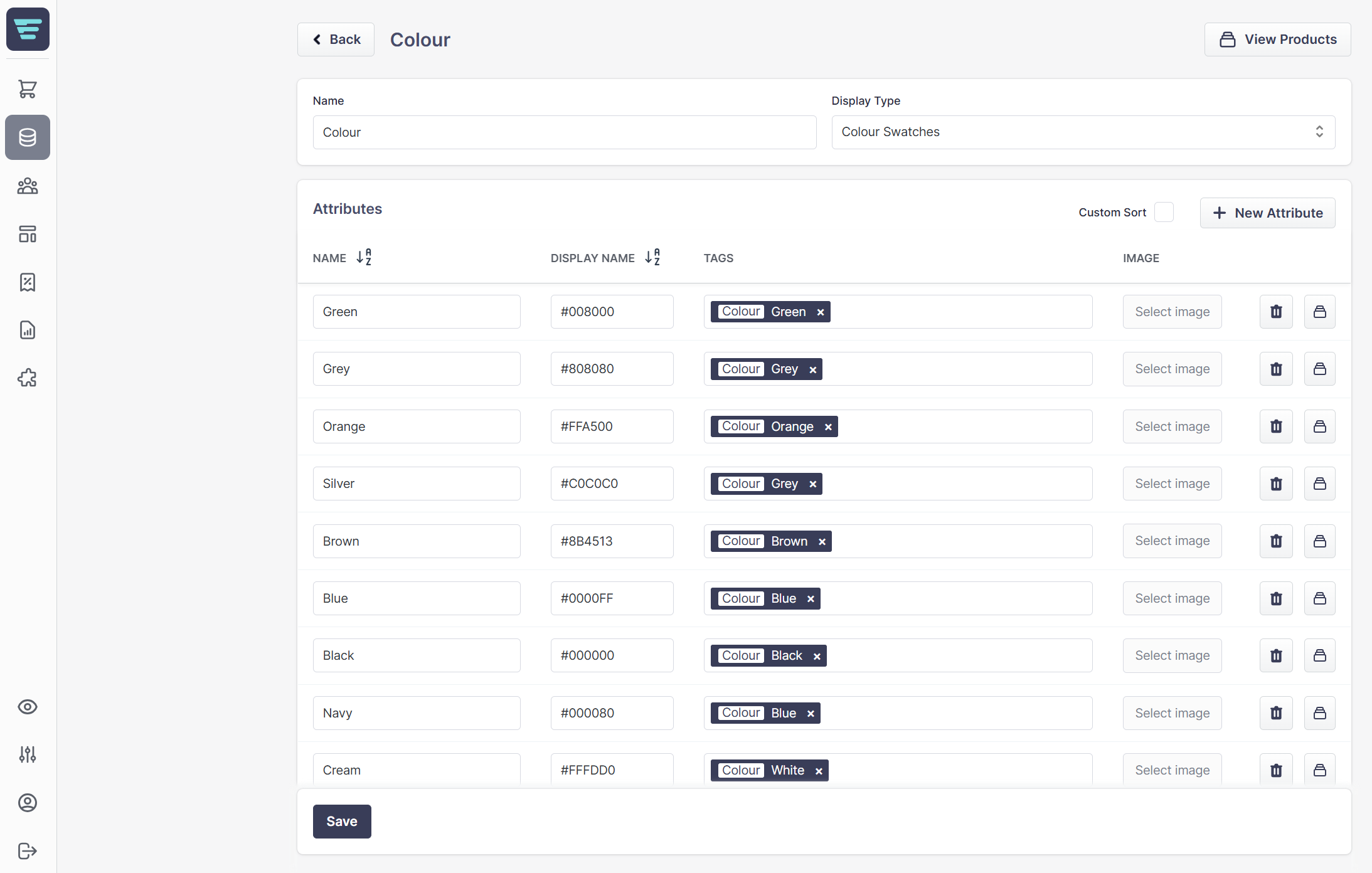 The result is a shorter route from a large catalogue to a manageable selection of relevant products.
Use promotions without adding friction
Promotions are another important part of beauty ecommerce, from seasonal offers and introductory discounts to bundles, multibuys and targeted promotions.
But promotions should make the shopping journey clearer, not more complicated.
A discount that is difficult to understand, a promotion that only applies to certain variants or a code that fails at checkout can quickly undermine an otherwise good experience.
Aero gives retailers the flexibility to build promotional rules around the way they sell. Products and variants can carry tags that can be used by store functionality such as discounts, while smart pricing can support different price points, including time-limited and quantity-based pricing.
This gives agencies the underlying flexibility to create promotional experiences around a retailer's particular requirements rather than forcing every beauty brand into the same template.
Keep the experience simple
Beauty ecommerce can easily become visually and functionally crowded.
There are products to discover, ingredients to explain, shades to compare, promotions to communicate and plenty of opportunities to introduce additional content. Adding more to the page is not necessarily the same as making it more useful.
The priority should be helping shoppers answer a few basic questions quickly:
Is this the right product for me?
What do I need to know before buying it?
Can I trust this retailer?
How easily can I complete my purchase?
Good UX brings these elements together without making the customer work harder than necessary.
That means the ecommerce platform underneath the storefront matters too. A platform should give retailers and their agencies the flexibility to build the experience they need without requiring unnecessary layers of third-party functionality to achieve basic ecommerce tasks.
Build around the way your customers shop
There is no single UX formula for beauty ecommerce.
A luxury skincare brand may need a very different experience from a large cosmetics retailer or a specialist haircare store. What they have in common is the need to help customers navigate complex product ranges and make confident purchasing decisions online.
That is where a flexible ecommerce platform can make a difference.
Aero provides the core ecommerce functionality for product management, variants, attributes, search, filtering and promotions, while its developer-first architecture allows agencies to extend the platform when a retailer needs something more specific.
For beauty brands, that could mean building product discovery around the attributes their customers actually care about, creating richer product specifications or developing promotional functionality that fits the brand's commercial model.
The aim is not to add more functionality for its own sake. It is to give shoppers a clearer route from discovery to purchase.
Give beauty shoppers a better way to buy online
Beauty retail has always depended on helping customers find products that feel right for them. Online, that means replacing some of the guidance and product discovery that happens naturally in a physical store with a well-designed digital experience.
For retailers, that starts with the fundamentals: a well-structured catalogue, useful product information, effective search and filtering, relevant promotions and a straightforward path to purchase.
Aero gives retailers and agencies the flexibility to build those experiences around the products they sell and the customers they serve.
Book a demo to see how Aero can support a more flexible ecommerce experience for your beauty brand.